![Health Tourism AI SEO Guide: Global Patient Acquisition Strategy in 10 Languages [2026]](/_next/image?url=https%3A%2F%2Fmedia.techsy.io%2Ftechsy-io%2Fsanity-asset-a874fe7bfc0b376fdc3da690b82aa2a5e4af6015-1376x768-1200x630.jpg&w=3840&q=75)
Turkey's health tourism market surpassed $3 billion in 2025, with over 1.4 million patients arriving in the country. Yet the vast majority of clinics are still spending $20,000-140,000/year on Google Ads while remaining virtually invisible in organic search. If you're looking for health tourism SEO agency alternatives, this AI SEO guide is exactly what you need: from AI-powered autonomous SEO solutions to cost comparisons with the traditional agency model, from 10-language content strategy to a 12-month implementation roadmap — everything you need is here.
Health Tourism AI SEO: Why Standard SEO Isn't Enough
Health tourism SEO is a multilingual, multi-market search engine optimization discipline that helps clinics and hospitals become visible to international patients on Google and other search engines. Also known as medical tourism SEO, this field requires managing YMYL-compliant content production, E-E-A-T signal strengthening, hreflang architecture, and cultural localization simultaneously.
There's a world of difference between SEO for an e-commerce site and international patient-targeting SEO for a dental clinic. A correct keyword strategy alone isn't enough; language, culture, legal compliance, and trust-building must all work together.
What Is YMYL and How Does It Affect Health SEO?
YMYL (Your Money Your Life) is the high-quality standard Google applies to content that can directly affect a user's health, safety, or financial situation. Health tourism websites fall into this category; every page on your clinic's site is subject to far stricter evaluation than ordinary blog content.
What Is E-E-A-T and Why Is It Mandatory for Health Tourism?
E-E-A-T (Experience, Expertise, Authoritativeness, Trustworthiness) is the four core quality criteria Google uses to evaluate YMYL content. Without doctor profiles, clinic accreditations, real patient testimonials, and scientific citations, reaching the top rankings on Google for health tourism sites is practically impossible.
Multilingual Structure, Hreflang, and International Targeting
A patient from Germany searches in German; one from Saudi Arabia searches in Arabic. You can't capture a global patient audience with a single-language site. Multilingual SEO infrastructure requires subdomain or subdirectory architecture, correct hreflang implementation, and separate keyword research for each language. We'll cover the technical details of this topic in later sections.
Patient Journey and Search Intent Mapping
An international patient makes a treatment decision in several stages. Different keywords come into play at each stage, and AI tools for healthcare can help shorten this process.
| Stage | Search Behavior | Example Query |
|---|---|---|
| Research | General information gathering | "what is dental implant" |
| Comparison | Country and price comparison | "dental implant Turkey vs Germany cost" |
| Clinic Selection | Specific clinic search | "best dental clinic Istanbul reviews" |
| Appointment | Conversion intent | "free dental consultation Turkey" |
Your health tourism SEO strategy must address all four of these stages. Focusing only on the "information gathering" stage drives traffic but not appointments.
2026 Health Tourism SEO Pricing and the Agency Model
Pricing is the first thing people searching for a health tourism SEO agency want to know. Let's clarify how the traditional agency model works and where health tourism SEO pricing stands as of 2026.
Typical Health Tourism SEO Agency Service Scopes
A health tourism digital marketing agency typically offers these services:
- Keyword research — Multilingual keyword analysis by target market
- Technical SEO audit — Site speed, mobile compatibility, crawl errors
- Content production — Blog posts, procedure pages, landing pages
- Link building — Medical directories, guest posts, digital PR
- Reporting — Monthly performance reports, keyword tracking
What don't they do? Most agencies don't offer simultaneous content production in 10 languages, real-time technical monitoring, or AI-powered automation. Additional fees are charged per language, and scaling increases costs linearly.
How Much Do Health Tourism SEO Services Cost in 2026?
Health tourism SEO pricing as of 2026 ranges from approximately $700 to $8,300+/month. Price is determined by the number of target languages, content volume, and technical scope. AI-powered autonomous SEO alternatives start considerably lower, offering a meaningful cost advantage.
| Level | Monthly Fee (USD) | Scope | Typical Time to Results |
|---|---|---|---|
| Starter | $700-1,400 | 1-2 languages, basic keywords, technical audit | 6-9 months |
| Mid-Scale | $1,400-3,300 | Multilingual keywords, hreflang, active content | 4-6 months |
| Enterprise | $3,300-8,300+ | Multiple specialties, aggressive content, reputation management | 3-6 months |
| Project-Based | $2,100-14,000 | New site setup + research (one-time) | Variable |
Hourly consulting rates range from $25 to $85+. For comparison, similar services in the US range from $750-1,500/month for solo practitioners to $3,000-8,000+/month for large agencies.
What Are the Limitations of the SEO Agency Model?
Agencies aren't bad, but they have structural limitations:
- Linear scaling — Each new language requires additional staff, additional cost. Working in 10 languages = 10x budget increase.
- Reaction time — Technical issues are typically caught in quarterly audits; rankings can drop during those 3 months in between.
- Key person dependency — If a key person leaves, institutional knowledge weakens.
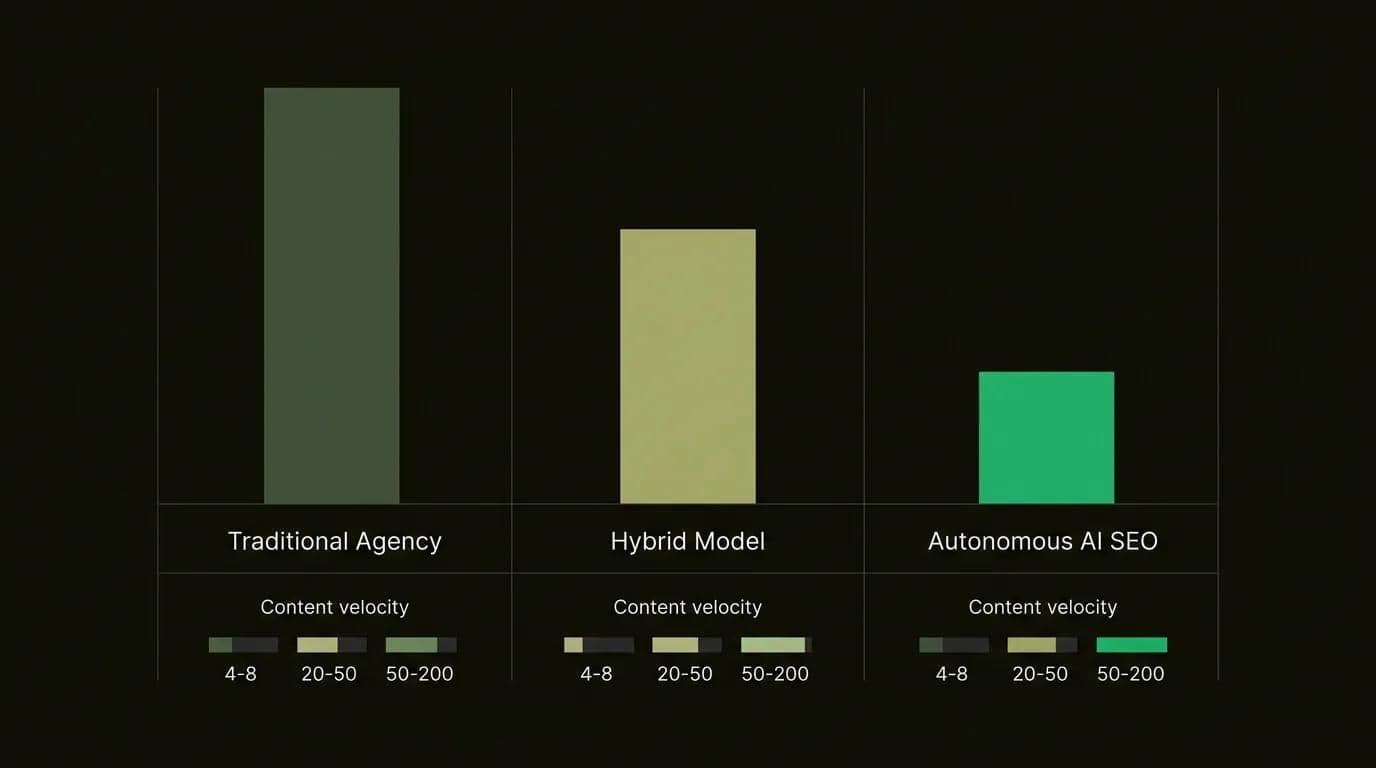
- Content velocity — With an average capacity of 4-8 pieces of content/month, scaling across 10 languages takes years.
For a detailed comparison, check our agency vs. AI SEO comparison guide.
Want to optimize your clinic's current digital marketing spend? Get a free cost analysis from Techsy. Free Cost Analysis →
How Does AI SEO Work in Health Tourism?
AI-powered SEO is a modern search engine optimization approach that uses AI tools for keyword research, competitor analysis, content production, and technical optimization processes. It emerged as a response to the limitations of the traditional agency model, and the concept of autonomous SEO software is the most advanced form of this approach.
That said, let's be upfront: claiming it's the only solution for every situation wouldn't be realistic.
What Is Autonomous SEO Software?
Autonomous SEO software is a software system that performs keyword research, content production, technical optimization, and internal linking using AI with minimal human intervention. It works 24/7, produces multilingual content simultaneously, detects technical issues in real time, and — unlike the traditional agency model — scales logarithmically: each additional language or page reduces the marginal cost.
How Does Autonomous SEO Software Work?
The workflow operates like this:
- Competitor and keyword analysis — AI scans search data in the target market and identifies opportunity keywords
- Content planning — Automatically creates internal link maps and cross-link structures
- Content production — Produces content simultaneously in multiple languages, meeting SEO requirements
- Technical audit — Monitors site health 24/7, detecting broken links and crawl errors in real time
- Performance tracking — Continuously analyzes rankings, traffic, and conversion data via API integrations; automatically manages migration processes
This approach is essentially an adaptation of the autonomous agent architecture covered in an AI agents guide for businesses applied to SEO.
Is AI Content Production Risky in the Healthcare Sector?
AI content production in the healthcare sector must be used carefully in the YMYL domain. Google doesn't automatically penalize AI-generated content, but it doesn't compromise on expert review and accuracy criteria. AI content published without expert oversight can lead to significant ranking losses.
The safest approach: AI draft + medical expert review + E-E-A-T signals. AI can increase research and drafting speed up to 10x, while doctor review provides the accuracy layer. This is where the answer to "how to do SEO with AI" lies: combining human expertise with automation.
Traditional SEO Agency vs. AI SEO: Which Is Better?
The fundamental difference between a traditional SEO agency and AI SEO is the scaling model. Agencies scale linearly with staff increases, while AI systems scale logarithmically and each additional language reduces the marginal cost. While agencies remain strong in strategy and PR relationships, AI offers a clear advantage in multilingual content velocity and technical monitoring.
| Criterion | Traditional Agency | Autonomous AI SEO | Hybrid Model |
|---|---|---|---|
| Monthly Cost | $1,400-8,300+ | $140-840 | $840-2,200 |
| Content Velocity | 4-8 pieces/month | 50-200 pieces/month | 20-50 pieces/month |
| Language Support | 1-3 languages | 10+ languages simultaneously | 5-10 languages |
| Technical SEO | Manual audit (quarterly) | 24/7 autonomous monitoring | AI monitoring + expert interpretation |
| E-E-A-T Quality | High (expert team) | Medium (expert oversight needed) | High (AI + expert) |
| Scaling | Linear (staff increase) | Logarithmic (low marginal cost) | Balanced |
| Best For | Strategy, PR, relationships | Content volume, technical, multilingual | Global growth |
Conclusion: Agencies remain strong where strategy and PR relationships are required. But where multilingual content scaling and technical monitoring are concerned, the AI alternative offers a real advantage. For many clinics, the hybrid model is the most sensible path. For detailed cost analysis, see our autonomous SEO infrastructure cost analysis page.
Want to explore ways to strengthen your current SEO with AI? Talk to the Techsy team. Free Consultation →
10-Language Multilingual SEO Strategy: Step-by-Step Implementation
Are you going to hire 6 separate content teams for 6 languages? This is one of the biggest dilemmas for health tourism clinics. An effective international patient SEO strategy must be structured to cover multiple languages, cultures, and search engines. If a multilingual SEO strategy is not configured correctly, budgets bleed, quality drops, and depth can't be built in any market.
Target Market Selection: Germany, UK, Middle East, CIS
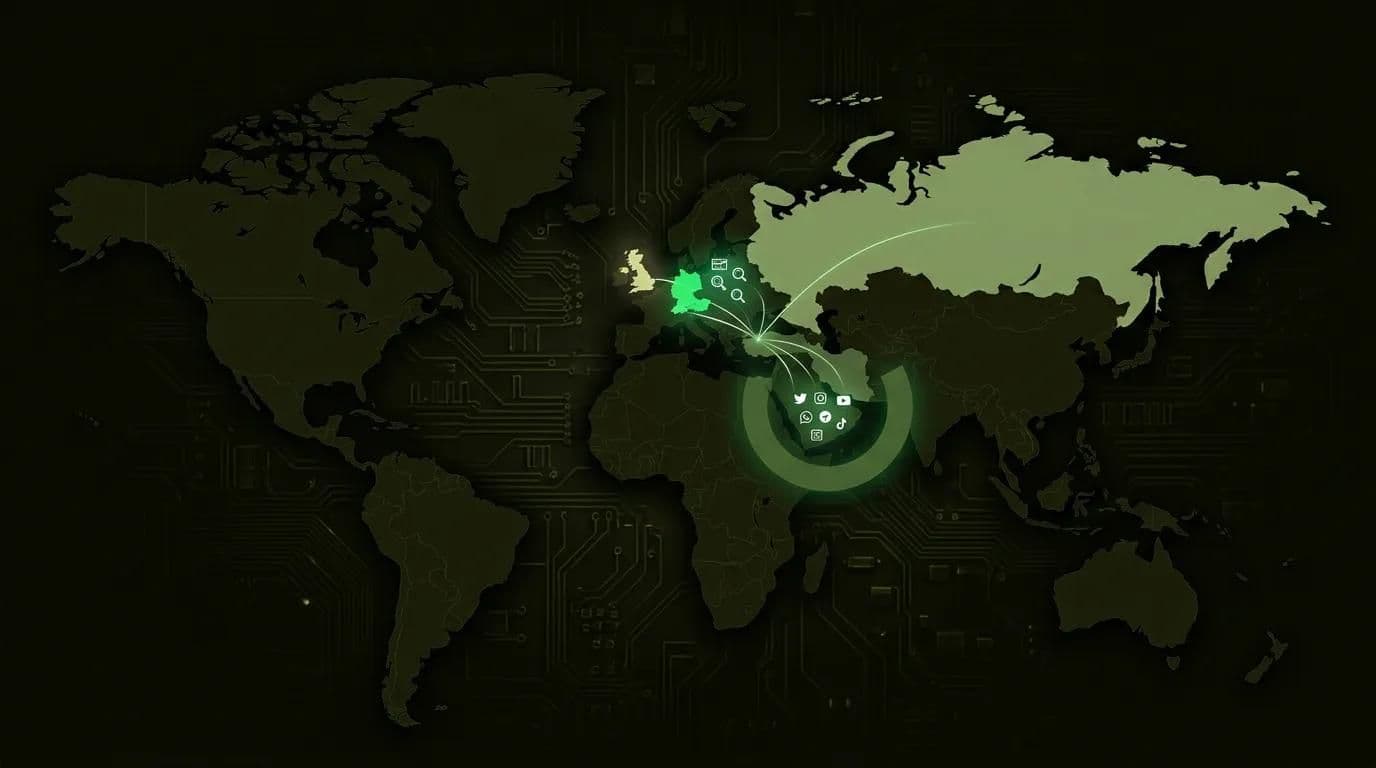
Each market shows different search behavior and platform preferences. International patient acquisition strategies don't work without regional depth:
| Market | Language | Platform Priority | Search Behavior | Competition |
|---|---|---|---|---|
| Germany/DACH | German | Google.de, Jameda | Detailed research, seeks certifications | High |
| UK | English | Google.co.uk, NHS comparison | Seeks price + quality balance | Medium |
| Middle East | Arabic | Google, Instagram, WhatsApp | Reference-driven, visual-heavy | Low |
| CIS | Russian | Yandex, VKontakte, Telegram | Platform-specific, social trust | Low |
A dental patient in Germany searches Google for "Zahnimplantat Türkei Kosten" (dental implant Turkey prices). It's impossible to capture this query with only English content. For in-depth information about international patient acquisition strategies, check our related guide.
What Is Hreflang and How Is It Implemented?
Hreflang is the HTML tag that tells search engines which language and country versions of a web page exist. If not correctly implemented on health tourism sites, different language versions cannibalize each other — and the same clinic's German, English, and Arabic pages end up competing with each other on Google.
Here's the basic structure:
<link rel="alternate" hreflang="tr" href="https://www.yourclinic.com/dis-implanti" />
<link rel="alternate" hreflang="de" href="https://www.yourclinic.com/de/zahnimplantat" />
<link rel="alternate" hreflang="en" href="https://www.yourclinic.com/en/dental-implant" />
<link rel="alternate" hreflang="ar" href="https://www.yourclinic.com/ar/زراعة-الأسنان" />
<link rel="alternate" hreflang="x-default" href="https://www.yourclinic.com/en/dental-implant" />
The subdirectory (/de/, /en/) structure is more practical than subdomains for most health tourism sites: it shares single domain authority and is easier to manage. For technical details and internal link management, see our multilingual technical SEO architecture guide page.
What Is the Difference Between Content Localization and Translation?
Translation is simply transferring words from one language to another. Localization is the process of adapting cultural context, local search habits, and trust signals to the target market. In health tourism, localization is far more critical than translation.
For example: Certification and accreditation emphasis is critical for the German market; German patients look for JCI or ISO certifications. In the Arab market, referrals and recommendations from acquaintances are front and center. Publishing the same procedure page just by changing the language falls short in both markets.
AI-Powered Multilingual Content Scaling
This is exactly where autonomous SEO software makes the difference. Simultaneous content production in 10 languages, which takes months with manual processes, can be completed in weeks with AI. But the critical point: a native language review layer is mandatory in every language. AI produces, a local expert verifies, a medical editor checks YMYL compliance. This three-stage process provides both speed and quality.
Technical SEO Checklist for Health Tourism (2026)
Technical SEO is the backbone of medical tourism websites. If clinic website technical optimization isn't solid, content quality alone won't deliver results.
Core Web Vitals and Page Speed Optimization
Health tourism sites are at a disadvantage for page speed with their visually heavy structures. Before/after photos, clinic videos, and 360-degree tour images can hurt the LCP (Largest Contentful Paint) score.
- LCP target: Under 2.5 seconds (3 seconds on mobile)
- INP target: Under 200ms (for interactive elements)
- CLS target: Under 0.1 (preventing visual shift)
- Practical solution: WebP/AVIF format, lazy loading, CDN deployment, latency minimization with serverless edge functions
Real-world benchmark data: Sites that improved page speed saw conversion rates rise from 0.8% to 2.3% through increased throughput.
Which Schema Markup Types Should a Health Tourism Website Use?
Here are the five essential schema markup types for health tourism websites:
- MedicalClinic — Clinic name, address, specialties, and language information
- FAQPage — Frequently asked questions and answers (triggers rich snippets)
- HowTo — Treatment procedure steps and processes
- Review — Patient evaluations and ratings
- MedicalProcedure — Treatment details, duration, and pricing information
These structured data trigger rich snippet appearances and increase the chances of being selected as a source in AI search engines. Here's a MedicalClinic schema example for your clinic:
{
  "@context": "https://schema.org",
  "@type": "MedicalClinic",
  "name": "Your Clinic Name",
  "medicalSpecialty": "Dentistry",
  "address": {
    "@type": "PostalAddress",
    "addressLocality": "Istanbul",
    "addressCountry": "TR"
  },
  "availableLanguage": ["tr", "en", "de", "ar", "ru"],
  "review": {
    "@type": "Review",
    "reviewRating": {"@type": "Rating", "ratingValue": "4.8"}
  }
}
When FAQPage, HowTo, and Review schemas are also added, you'll achieve rich snippet appearances in search results.
Mobile Experience and International User Testing
Device preferences differ across target markets. The Middle East market skews toward iOS usage, while Android is dominant in CIS countries. RTL (right-to-left) layout is mandatory for Arabic pages. Each language version must be tested on the typical device and browser combination of that market.
Autonomous Technical SEO Monitoring: 24/7 Tracking
Traditional agencies conduct quarterly technical audits. A crawl error, broken hreflang, or index drop can go unnoticed for 3 months in between. An AI-based technical monitoring system works 24/7, detecting issues in real time and sending alerts. For a broader perspective on autonomous monitoring tools, check our AI tools for business page.
Content Strategy: Which Content Types Convert Patients?
Medical tourism digital marketing lives and dies by its content strategy. But not all content does the same job; procedure pages, blog posts, and landing pages each have different roles.
Procedure Pages, Blog Posts, and Landing Pages: The Difference
| Content Type | Search Intent | Conversion Role | Example |
|---|---|---|---|
| Procedure Page | Information gathering | Trust building | "What Is Dental Implant?" |
| Blog Post | Long-tail capture | Traffic + authority | "Dental Implant Prices in Turkey 2026" |
| Landing Page | Conversion | Appointment/form | "Free Dental Consultation" |
| Video Content | Social proof | Trust + engagement | Patient success story |
Clinic landing page optimization directly affects the traffic-to-conversion rate. Procedure pages satisfy information needs while landing pages focus on form completion. Both target different queries in the keyword strategy.
Content Patterns That Strengthen E-E-A-T Signals
- Doctor profile pages — Full name, specialty, publications, certifications (Experience + Expertise)
- Clinic accreditations — JCI, ISO, Ministry of Health licenses (Authoritativeness)
- Patient testimonials — Video testimonials, written reviews (Trust)
- Medical publication references — Scientific source links (Expertise)
- "Author" information — Doctor/expert signature on every blog post
Patient Success Stories and Video Content
Pages with video content can have conversion rates up to 80% higher. Before/after galleries are the most powerful social proof tool for health tourism patient acquisition. Adding multilingual subtitles builds trust across different markets. A video testimonial from a German patient with German subtitles can be more effective than thousands of words of blog content.
AI SEO vs Google Ads: Health Tourism Ad Cost Comparison
How should your clinic spend its medical tourism advertising budget? The choice between organic search optimization and paid advertising is a choice between short-term gains and long-term growth.
How Much Do Google Ads CPC Costs for Health Tourism?
Health tourism Google Ads costs vary from $3-12 per click depending on the keyword. For high-volume queries like "dental implant Turkey," annual advertising budgets can exceed $100,000, and when ads stop, traffic drops to zero.
Health tourism keywords on Google Ads get more expensive every year:
| Keyword | Average CPC (USD) | Monthly Searches | Annual Ads Budget (100 clicks/day) |
|---|---|---|---|
| dental implant Turkey | $3-8 | 12,000+ | $109,500-292,000 |
| hair transplant Turkey cost / Istanbul hair transplant | $5-12 | 8,000+ (EN) / 12,000+ (TR) | $182,500-438,000 |
| rhinoplasty Turkey | $4-10 | 5,000+ | $146,000-365,000 |
| IVF Turkey | $3-7 | 3,000+ | $109,500-255,500 |
When ads stop, traffic drops to zero. This means Ads operates as a "rented traffic" model.
The value of organic rankings is especially striking for high-volume queries like "Istanbul hair transplant prices 2026": the Istanbul hair transplant industry alone generates $800M+ in annual revenue, and 70% of these patients find their clinic through organic search.
Which Provides Better ROI: Google Ads or Organic SEO?
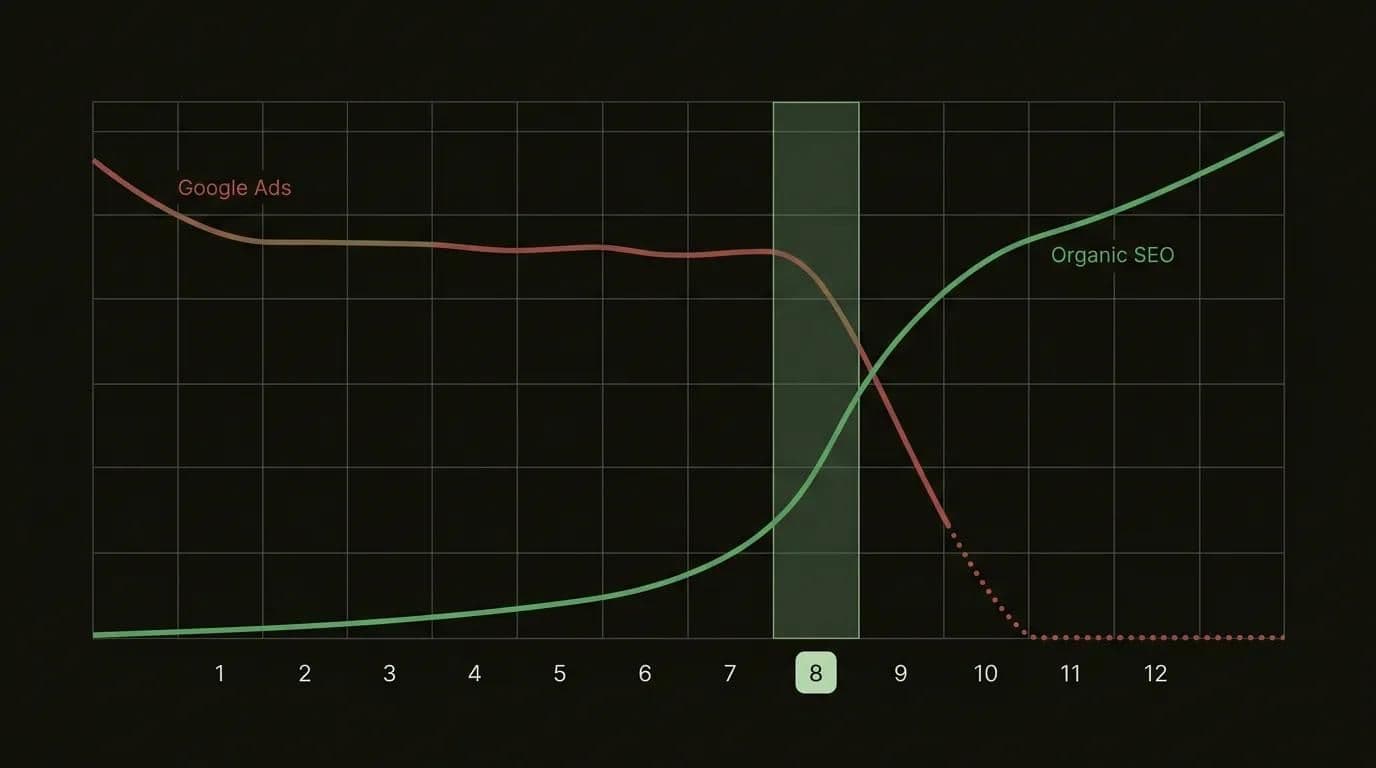
Organic SEO provides 3-5x lower patient acquisition cost (CAC) compared to Google Ads in the long run. While traffic drops to zero when ad budgets stop, organic rankings continue generating value for months and years. However, patience is required for results in the first 3-6 months.
Real-world data: A hair transplant clinic increased its organic traffic by 340% in 8 months (from 1,200 to 5,280 monthly sessions). When a dental clinic reached the first page for "dental implant Turkey," monthly form completions rose from 12 to 67. Increasing organic traffic is a long-term, compounding investment.
Blended Strategy: How to Combine SEO + Ads + AI
Don't put your entire initial budget into Ads. The pragmatic approach:
- Months 1-3: Ads-first (fast traffic) + SEO technical infrastructure setup
- Months 4-6: Organic traffic begins, Ads budget cut by 30-40%
- Months 7-12: Organic dominant, Ads shifts to retargeting and brand queries
AI automation is active at every stage: content production speed, technical monitoring, keyword opportunity detection. If you're getting digital marketing consulting, be sure to ask about the feasibility of this blended model.
AEO and GEO: Health Clinic Visibility in AI Search Engines
Answer Engine Optimization (AEO) is the optimization discipline that ensures website content is selected as a source and shown as a direct answer in AI-powered search engines like ChatGPT, Perplexity, and Google AI Overview. Its difference from traditional SEO is that it focuses on "being cited" rather than ranking.
You won't find this topic covered in most English-language resources — yet.
How to Appear in ChatGPT, Perplexity, and AI Overview
Four core criteria must be met to appear in AI search engines:
- Direct answer format — Provide clear, summarizable answers to questions
- Structured data — Define information with schema markup
- Source credibility — Strengthen E-E-A-T signals and domain authority
- Freshness — Provide dated and regularly updated information
Patients aren't just searching on Google anymore. When a German patient asks ChatGPT "Zahnimplantat Türkei beste Klinik," which sources does the AI reference? Structured data, reliable source citations, and a clear answer format are the keys to standing out on these platforms.
Structured Data and AEO Compliance
Structured data (schema markup) implementation is critical not just for Google rich results, but also for AI engines to extract data. FAQPage schema helps the AI show your site as a source while directly answering questions. MedicalClinic schema presents your clinic information in a structured format.
AEO Implementation Examples in Health Tourism
Scenario: A UK patient asks Perplexity "best dental implant clinic in Turkey 2026." The AI prefers sources that have FAQ schema, offer current price tables, contain patient reviews, and have structured clinic information. If your site meets these criteria, your chances of being cited by AI increase dramatically.
Patient Conversion: From Traffic to Appointments
Organic traffic grew but appointment numbers are stagnant? This is the classic symptom of missing health tourism conversion optimization. Without optimizing the health tourism lead generation process, traffic growth alone creates no value.
Form Optimization and WhatsApp Integration
Clinics that respond within 5 minutes get 5x more appointments. This data shows the critical role of speed in conversions. WhatsApp Business API integration is essential, especially for the Middle East market. Multilingual automated response templates dramatically reduce first-contact time. In form design, only ask for essential information: name, procedure, country, contact. 10-question forms kill conversions. You can fully automate this process with AI appointment assistant solutions.
CRM and Lead Nurturing Process
Once a lead is captured, the process doesn't end — it begins:
- Instant automated response — Confirmation and expectation management within 30 seconds of form submission
- Personal follow-up within 48 hours — Detailed information from a clinic coordinator
- Email sequence — Procedure details, patient stories, pricing information (3-5 emails)
- WhatsApp follow-up — Q&A, visual sharing, appointment confirmation
AI-powered CRM systems can automate these steps to a large extent.
Language Segmentation and Personalized Communication
Sending an English follow-up email to a patient who filled out a form in German breaks trust. Language segmentation means every patient receives communication in their native language. With AI, real-time translation support and a personalized patient journey can be created.
Transitioning to Health Tourism AI SEO: 12-Month Implementation Roadmap
The health tourism SEO roadmap consists of three phases: technical infrastructure setup (months 1-3), content scaling and link building (months 4-6), automation and expansion to 10 languages (months 7-12). This plan enables a clinic starting from scratch to build an organic patient acquisition channel in 12 months.
Everyone says "do SEO," but nobody provides a clear plan for how to start and what to do when. Here's your actionable roadmap.
Months 1-3: Technical Infrastructure and Core Content
- Comprehensive technical SEO audit — Site speed, mobile compatibility, crawl errors, index status
- Schema markup setup — MedicalClinic, FAQPage, BreadcrumbList
- Hreflang infrastructure — At least 2 languages (start with English + primary target market language)
- Core 20 pages — 10 procedure pages + 10 blog posts
- Google Business Profile optimization — Complete information, photos, reviews
- Keyword research — Multilingual keyword map by target markets
During this phase, you'll get fast traffic in parallel with Google Ads. Since SEO hasn't yet matured, Ads keeps the revenue stream alive.
Months 4-6: Content Scaling and Link Building
- 50+ content target — Blog, procedure, and FAQ pages
- Multilingual expansion — 2-3 additional languages (German, Arabic first)
- Backlink strategy — Medical directories, guest posts, digital PR
- Patient testimonial campaign — Video testimonial collection
- AI-powered scaling — Increasing content production speed with automation
For a health tourism backlink strategy, medical directories (WhatClinic, Bookimed, Medical Departures) and international health tourism portals are critical targets.
Months 7-12: Automation, Scaling, and ROI Tracking
- Expansion to 10 languages — All target markets covered
- AEO compliance — Content optimization for AI search engines
- Autonomous technical monitoring — 24/7 site health tracking
- Reducing Google Ads budget — As organic traffic becomes dominant, Ads shifts to retargeting
- Performance KPI tracking:
| KPI | Target (Month 12) |
|---|---|
| Organic traffic increase | 200-400% |
| First-page keyword rate | 30%+ |
| Monthly form completions | 50+ |
| Patient acquisition cost (CAC) | 60-70% drop vs. Ads |
Why Techsy? Our Autonomous SEO Infrastructure Approach
At Techsy, we offer health tourism clinics a hybrid model: we combine AI infrastructure with strategic consultancy. Our goal is neither to replace agencies nor to promise a magic solution; it's to build a scalable, sustainable, and measurable digital growth infrastructure.
- Simultaneous autonomous content production and optimization in 10 languages — A process that takes months manually can be completed in weeks
- Healthcare-specific E-E-A-T-compliant content layer — AI draft + medical expert review + SEO optimization
- 24/7 technical SEO monitoring and autonomous correction — Broken links, crawl errors, hreflang inconsistencies detected instantly
- Cost transparency — Models starting at 1/5th of agency pricing, performance-based pricing options
- Production-tested full-stack technical infrastructure — Battle-tested deployment experience on Next.js, Node.js, and PostgreSQL for web performance, API integration, and SEO infrastructure from the same team. Latency optimization, CI/CD pipelines, and benchmark testing are part of our standard workflow
For clinics considering enterprise-scale AI transformation, our enterprise AI transformation guide offers a comprehensive roadmap.
Real result: At Techsy, we built the AI SEO infrastructure for an Istanbul clinic in 10 languages — in 8 months, organic patient inquiries grew 4.7x and the Google Ads budget was reduced by 55%.
Want to test your clinic's organic visibility in 10 languages? Get a free SEO audit from Techsy. Free SEO Audit →
Frequently Asked Questions (FAQ)
What is a health tourism SEO agency and what does it do?
A health tourism SEO agency is a digital marketing specialization that helps clinics and hospitals become visible to international patients on Google. It covers multilingual keyword research, YMYL-compliant content production, technical optimization, link building, and conversion optimization services. What sets it apart from regular SEO agencies is the required mastery of E-E-A-T criteria and medical terminology.
How much do health tourism SEO services cost in 2026?
In 2026, health tourism SEO costs range from $700 to $8,300+/month. Starter packages (1-2 languages) start at $700-1,400, mid-scale multilingual packages at $1,400-3,300, and enterprise packages at $3,300-8,300+. AI-powered autonomous SEO alternatives start considerably lower.
How long does health tourism SEO take to show results?
Health tourism SEO work generally shows the first organic traffic increases within 3-6 months. For competitive keywords (like "dental implant Turkey"), expect to wait 6-12 months. AI-powered systems can shorten this timeline through content volume and technical optimization speed, but Google's indexing and authority evaluation still takes time.
Which provides better ROI: Google Ads or organic SEO?
Google Ads delivers faster results in the short term (1-3 months) but traffic drops to zero when the ad budget stops. SEO creates compounding value over 6-12 months and reduces patient acquisition cost by 3-5x in the long run. The ideal strategy is running Ads + SEO in parallel during the first months, then reducing ad spend as organic traffic matures.
Can AI-powered SEO replace an agency?
AI provides significant advantages in content volume, technical monitoring, and multilingual scaling — especially offering a logarithmic cost structure versus agencies' linear growth model. However, a human layer is still required for expert oversight in YMYL, strategic planning, and PR relationships. The hybrid model (AI infrastructure + expert consultancy) with proven results is the most effective approach. Talk with Techsy to evaluate whether the hybrid AI + expert model is right for your clinic. Schedule a Call →
How is hreflang implemented for multilingual SEO?
Hreflang tells search engines which language and country each page targets. It's added to the HTML head section or XML sitemap. The x-default tag is mandatory, self-referencing links are required, and language codes must follow the ISO 639-1 standard. Incorrect implementation can cause different language versions to cannibalize each other.
Which schema markup types should a health tourism website use?
MedicalClinic (clinic information), FAQPage (frequently asked questions), HowTo (procedure steps), Review (patient evaluations), and MedicalProcedure (treatment details) schema types should be used. These structured data trigger rich snippet appearances and increase the chances of being selected as a source in AI search engines.
Can English-only content serve patients worldwide?
English reaches a broad audience but is not sufficient on its own. 72% of German patients prefer content in their native language; even those who speak English click on German results at much higher rates. Arabic and Russian are essential for the Middle East and CIS markets — where English penetration stays below 30%. Content in 10 languages covers more than 90% of the potential patient audience, and real-world data shows multilingual sites generate 3-5x more international leads than their single-language counterparts.
I increased organic traffic but appointment numbers aren't growing. Why?
The main causes of this common traffic-conversion gap: wrong keyword targeting (informational vs. transactional intent), weak landing page design, slow form response time (responses taking more than 5 minutes drop conversions by 80%), and lack of trust signals (no testimonials, certifications, or patient reviews).
What is autonomous SEO software?
Autonomous SEO software is a system that performs keyword research, content production, technical optimization, and internal linking using AI with minimal human intervention. It works 24/7, produces multilingual content simultaneously, and detects technical issues in real time.
How does autonomous SEO software work?
Autonomous SEO software scales logarithmically rather than linearly — unlike the traditional agency model, each additional language or page reduces the marginal cost. AI agents manage competitor analysis, content planning, production, technical monitoring, and performance tracking end-to-end automatically.
How do you choose a health tourism SEO agency?
Ten critical criteria to evaluate when choosing a health tourism SEO agency:
- Healthcare sector experience — Proven track record in the YMYL domain
- Multilingual capacity — Ability to produce content in the languages of your target markets
- Verifiable case studies — Real traffic and conversion data
- Transparent pricing — Clear budget plan without hidden costs
- Reporting frequency — Monthly performance reports and KPI tracking
- E-E-A-T knowledge — Mastery of medical content quality standards
- Technical SEO competency — Hreflang, schema markup, site speed optimization
- GDPR awareness — International data protection compliance
- Client references — Existing clients you can contact
- AI/automation integration — Capacity to incorporate modern tools into the workflow
Is AI content production risky in the healthcare sector?
In the YMYL domain, AI content must be used carefully. Google doesn't automatically penalize AI-generated content, but continues to look for expert review and accuracy. The safest and most practical approach is creating drafts with AI, passing them through medical expert review, and strengthening E-E-A-T signals (doctor profiles, clinic accreditations, scientific citations). This hands-on process provides both speed and reliability.
Conclusion and Action Plan
Among health tourism SEO agency alternatives, AI-powered autonomous solutions are now a serious option to consider. While the traditional agency model remains strong in strategy and PR relationships, AI offers clear advantages in multilingual scaling, content velocity, and technical monitoring.
Five key takeaways:
- Health tourism SEO is not standard SEO — YMYL, E-E-A-T, and multilingual architecture are mandatory
- Pricing transparency is critical — In 2026, agency costs range from $700-8,300+/month, AI alternatives start much lower
- The hybrid model is the most sensible path for most clinics — AI infrastructure + expert consultancy combination
- AEO is the new battlefield — Visibility on ChatGPT and Perplexity is a competitive advantage post-2026
- The 12-month roadmap is actionable — Technical infrastructure (3 months) + content scaling (3 months) + automation (6 months)
Let's talk about your digital marketing strategy — schedule a free discovery call with the Techsy team. Get in Touch →